Join the discussion and follow me on these networks!
Reading the Past with the Eyes of Faith
History is often taught as a succession of dates, battles, political movements, and changing governments. We learn who won wars, who signed treaties, and which empires rose or fell. Yet beneath these events lies another history, one that is not always recorded in textbooks.
It is the spiritual history of humanity.
Recently, I travelled the eastern seaboard of the United States, following a route that unexpectedly became a pilgrimage through history. Beginning in Bangor, Maine, and traveling through Bar Harbor, Salem, Boston, Philadelphia, and finally back to Washington, D.C., I discovered that each place held more than historical significance. Each seemed to possess a spiritual atmosphere shaped by the choices, beliefs, and values of the generations who had lived there before. History, I realized, leaves more than monuments. It leaves moral lessons.
Our first stop, which deeply affected me, was Salem. Walking its streets, I found myself reflecting on one of the darkest chapters in American history. During the Salem Witch Trials, fear became stronger than truth. Suspicion replaced compassion, neighbors accused neighbors, and innocent women and some men were condemned because of rumors, prejudice, and mass hysteria. It began with only a handful of accusations. Soon, fear spread like wildfire.
As I stood there, I couldn't help wondering how easily societies still fall into the same temptation. Throughout history, we have repeatedly looked for someone to blame for our fears. It is easier to point a finger than to examine our own hearts. Salem reminds us how quickly fear can become injustice when compassion is absent.
Jesus warned us about this spirit of judgment when He said,
"Do not judge, or you too will be judged." (Matthew 7:1)
Travelling south to Boston presented a different lesson. Boston played a pivotal role in America's struggle for liberty, and yet I found myself wrestling with another contradiction. Many of the city's influential leaders were deeply committed Puritans who sought religious freedom and built their communities upon biblical principles. Yet many also owned slaves and lived within social systems that separated people according to class and status. Walking the Freedom Trail and listening to the story of the Boston Tea Party, I was struck by the tension between the ideals people proclaimed and the realities they practiced.
History reminds us that sincere faith is not measured merely by doctrine. It is measured by how we treat one another. Perhaps every generation must ask whether its beliefs are reflected in its actions.
The Apostle James wrote,
"Faith by itself, if it does not have works, is dead." (James 2:17)
The atmosphere changed again as we entered Philadelphia. Founded by William Penn, a Quaker whose vision centered on peace, religious liberty, and respectful relationships with Native peoples, the city seemed to carry a gentler spirit. Although no society has ever been perfect, there was a noticeable openness, an invitation to dialogue, creativity, and thoughtful reflection. It reminded me that leadership rooted in humility often leaves a different legacy from leadership rooted in fear.
Franklin Delano Roosevelt Memorial.
Finally, back home in Washington, D.C., I visited the Franklin Delano Roosevelt Memorial. Unlike many monuments that celebrate military victories, this memorial quietly tells the story of perseverance through suffering. Roosevelt led America during two of its darkest chapters, the Great Depression and the Second World War, while living with the daily challenges of disability. One inscription stopped me in my tracks:
"We must scrupulously guard the civil rights and civil liberties of all citizens, whatever their background. We must remember that any oppression, any injustice, any hatred, is a wedge designed to attack our civilization."
Those words seem as relevant today as when Roosevelt first spoke them. History repeatedly demonstrates what happens when hatred is allowed to flourish.
The French Revolution
The French Revolution emerged after years of inequality and hardship. The Great Depression revealed how economic despair can threaten both dignity and hope. Across the centuries, whenever injustice is ignored and compassion disappears, societies begin to fracture.
Scripture teaches the same principle.
"Whatsoever a man soweth, that shall he also reap." (Galatians 6:7)
History is, in many ways, humanity's harvest. The choices made by one generation become the inheritance of the next. Perhaps that is why I have become increasingly drawn to narrative historical non-fiction. I no longer see history merely as a sequence of events. I see it as God's classroom. Each generation leaves behind testimonies, not only of success and achievement, but of pride, humility, justice, injustice, courage, and failure.
If we read history only with our minds, we accumulate knowledge. If we read history with our hearts, we gain wisdom. The Bible continually calls God's people to remember. Not simply to preserve facts, but to discern the spiritual lessons hidden within them.
"Remember the days of old; consider the years of many generations. Ask your father, and he will show you, your elders, and they will tell you." (Deuteronomy 32:7)
History is one of God's great teachers. Its monuments speak. Its stories warn. Its failures humble us. Its victories encourage us. And if we have ears to hear, they continually point us back to the One who stands above every nation, every empire, and every generation, the Author of history itself.
Every generation leaves something behind. A story, a lesson, or a memory, which is the thread connecting us to those who walked before us. Our responsibility is not only to discover those threads but to ensure they are not lost.
What ordinary people’s stories reveal is that true greatness is more than just being recognized. Sometimes it is measured simply by faithfulness in persevering day after day through the grind.
Family stories are, perhaps, our own memorial stones. They remind us of who we are. They steady us when life becomes uncertain. And they help us understand that history is never merely something behind us; it continues to live quietly within us.
We use cookies to ensure that we give you the best experience on our website. If you continue to use this site we will assume that you are happy with it.
You can revoke your consent any time using the Revoke consent button.
 Reading the Past with the Eyes of Faith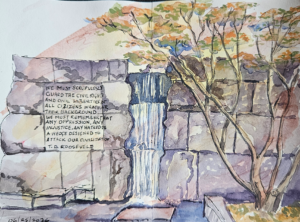


0 Comments