

 How Family Stories Preserve History
 How Family Stories Preserve History
Why remembering where we come from helps us endure where we are
History often arrives in grand or boring language. It speaks of wars, governments, migrations, revolutions, treaties, and discoveries. We are taught of empires rising and falling, economies flourishing or collapsing, and leaders shaping the destinies of nations. Seemingly far from relevant to our current day. Yet beneath these sweeping narratives lies something quieter, closer to home. Our family stories. It is often through family stories that history first becomes real to us, not as something distant or abstract, but as something concrete that family members lived.
A family narrative has a remarkable power to preserve history because it transforms historical events into human experience. It allows us to move beyond dates and documents and ask a deeper question:
What did it mean for ordinary people to live through these events?
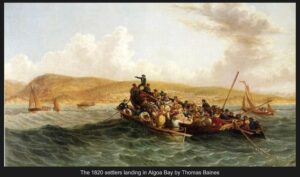
In our own family, the story of the 1820 Settlers to Albany in South Africa has become one such thread of remembrance.
Settlers in the Eastern Cape
The settlers in the Eastern Cape was more than a historical movement recorded in archives. It was the beginning of a difficult and uncertain journey lived by real families, men, women, and children who crossed oceans carrying hope, fear, determination, and perhaps more questions than answers.
Like many settler stories throughout history, theirs was not a tale of immediate success. The land was difficult, conditions were harsh, and expectations often collided with reality. Families faced hardship, loss, isolation, political instability, drought, conflict, and the enormous task of building lives in unfamiliar surroundings. Sometimes they were engaged in conflicts they had not been prepared for.
When viewed through history books alone, such events may appear as facts on a timeline. Yet, through family storytelling, they become deeply human. We imagine the anxieties of leaving home, the grief of separation, the courage required to begin again, and the stubborn resilience needed to survive when circumstances did not unfold as expected.
Its Not what Happened, but How it Felt.
The historical record tells us what happened. Family stories help us understand how it felt. This matters more than we sometimes realize. Because family stories do more than preserve memory, they help shape identity. Knowing that those who came before endured uncertainty, adapted to hardship, rebuilt after disappointment, and moved forward despite setbacks creates an invisible inheritance. Their story quietly whispers something to us:
You come from people who persevered.In tough seasons of life, that knowledge becomes unexpectedly grounding. When uncertainty arises, family stories remind us that struggle is not failure. Hardship is not the end of the story. The generations before us also encountered instability and disappointment, yet somehow they found ways to continue. Resilience, then, becomes something passed down. Not genetically, perhaps, but narratively. We inherit courage through stories.
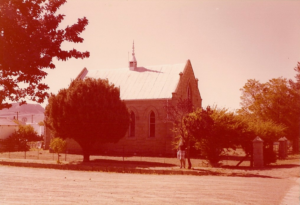 The story of the 1820 Settlers has often served in this way within our family, not merely as a record of ancestry, but as a reminder of endurance. Theirs was a generation that crossed oceans to face an uncertain future. Their choice to leave was often made under circumstances so bad that the uncertainty of the future paled compared to the excitement of starting fresh in a new, untamed land, free of the past. They adapted to changing landscapes, shifting economies, political tensions, and unpredictable futures. They learned to make homes where none yet existed. And perhaps, unknowingly, they left behind a blueprint for resilience.
Inherited Stories
History lives most powerfully through such inherited stories. Without them, we risk becoming disconnected not only from the past but from a deeper understanding of ourselves. We lose sight of the courage, sacrifice, mistakes, wisdom, and determination that shaped the path beneath our feet.
Scripture repeatedly calls people to remember. The Israelites built memorial stones after crossing rivers and surviving wilderness seasons, not simply to mark an event, but to ensure that future generations would ask, “What happened here?”
“Remember the days of old; consider the years of many generations.” Deuteronomy 32:7.
Family stories are, perhaps, our own memorial stones. They remind us of who we are. They steady us when life becomes uncertain. And they help us understand that history is never merely something behind us; it continues to live quietly within us, shaping the way we endure, rebuild, and hope. Perhaps that is why these stories matter so much. Because in remembering where we come from, we often rediscover the strength to continue forward.


0 Comments