What Is Narrative Historical Non-Fiction?
Writing true stories from the past with the heartbeat of lived experience
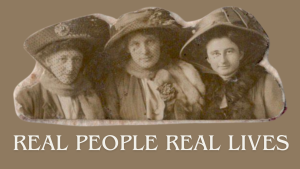
History is often presented to us as a procession of dates, treaties, battles, and proclamations. Did you enjoy your history lessons at school? If you were anything like me, you hated history, having to learn all the dates of various events. There seemed little point to it all. The events were important, yet they felt distant, having little relevance to today, rather like mountains seen far away through morning mist. What I longed to understand, however, was the human story beneath those events: the fathers, mothers, grandparents, the workers and dreamers, the ordinary people whose lives were shaped by the great movements of history.
This longing led me to take an interest in narrative historical non-fiction.
Narrative, historical non-fiction tells true stories from the past, but it tells them in a way that allows readers to step into the lives of the people who lived them. Instead of presenting history only as analysis or commentary, it draws upon the techniques of storytelling, scenes, character development, tension, and narrative movement, all the while remaining firmly rooted in historical truth.
In simple terms, it is history written as a story, but a story grounded in careful research and factual accuracy.
What is the difference between Narrative Non-Fiction and Historical Fiction?
These two forms of writing are close cousins, yet they stand on different foundations.
Narrative non-fiction tells a story that is based on real people and documented events. The writer cannot invent facts or change the historical record. Instead, the narrative is shaped from research, letters, documents, archives, historical accounts, and other sources that illuminate the lives being described.
Historical fiction, on the other hand, imagines a story within a historical setting. A novelist may create fictional characters or alter events to explore the spirit of a particular time period. Even when real historical figures appear, the narrative allows more freedom for invention and interpretation.
The difference lies in the relationship to truth.
Narrative non-fiction seeks to remain faithful to the historical record.
Historical fiction allows the writer to reshape the past in the service of the story.
Both forms can bring history alive, but they do so in different ways.
The Challenge of Writing History as Story
In my own writing, I have found myself walking a path somewhere between the historian’s careful documentation and the storyteller’s desire to breathe life into the past.
The story I am currently working on follows the life of a man whose experiences unfolded within a very real historical landscape. The timeline of his life, the wars, migrations, discoveries, and political shifts that shaped his world, forms the spine of the narrative.
Those historical events are not merely background scenery; they drive the story forward. They influence the choices people make, the opportunities that appear, and the hardships families must endure. I like to write from the family’s perspective, how each one felt or thought, and how the events that unfold shape their characters.
To understand that world, I have turned to many sources. I have consulted historical documents, including records from the British Parliamentary archives, examined personal letters, and searched through available historical references to build as accurate a picture as possible of the time in which these lives unfolded.
Each fragment of information becomes part of the structure, like carefully placed stones forming a bridge across time.
The Question of Voice
Yet a difficulty remains.
No historian, no writer, no matter how diligent, can truly recreate every word that was spoken between people long ago. We cannot sit at their tables, hear their voices, or watch their expressions as events unfold.
In that sense, every narrative reconstruction requires a measure of interpretation.
When I write these stories, I do so from a deeply personal and family perspective. Rather than standing at a distance and analyzing history from above, I try to look at the world through the eyes of the people who lived within it, families navigating uncertainty, individuals responding to forces larger than themselves, ordinary lives touched by extraordinary events.
Where conversations must be imagined, I try to remain faithful to what we know about the personalities, circumstances, and cultural context of the time. The goal is not invention for dramatic effect, but rather a thoughtful attempt to give breath and voice to human beings whose experiences deserve to be remembered.
History as the Framework of Human Lives
What becomes clear through this process is that history is never merely about political decisions or military campaigns.
History is about how those forces ripple outward into homes, marriages, livelihoods, and communities.
A war may be declared in a parliament chamber thousands of miles away, yet its consequences are felt in the quiet kitchens and farmsteads where families must adapt, endure, and carry on.
In this sense, the stories I am writing are less an academic commentary on historical events and more a portrait of how those events shape the lives of ordinary people.
The larger historical forces provide the structure. The human story gives them meaning.
Between Fact and Imagination
So where does that leave a writer working in this space?
Some readers may call such a work historical fiction because scenes and conversations must be reconstructed. Others may see it as narrative historical non-fiction because the characters, timeline, and documented events remain grounded in real history.
The truth may lie somewhere in the meeting place between the two.
What matters most to me is not the label, but the intention: to honor the lives of people who lived through significant historical change and to tell their story with honesty, respect, and care.
History is often described as the story of power, how it rises, shifts, and reshapes societies. Yet power does not move only through governments and armies. It moves quietly through families, through the opportunities and losses that shape the paths of individual lives.
When we tell these stories, we remember that history is not distant or abstract. It is personal.
It is the story of people like us.
And perhaps that is why such stories continue to matter. They remind us that every generation must walk its own uncertain road, guided by the courage and faith of those who came before.
As Scripture gently reminds us:
"I will open my mouth with a parable; I will utter hidden things, things from of old, things we have heard and known, things our ancestors have told us". Psalm 78:2-3 (NIV) and
“Remember the days of old; consider the years of many generations.” Deuteronomy 32:7
These passages are intended to teach future generations about God’s works by passing down historical lessons and ancestral testimony. In remembering, we begin to understand.
And in understanding, we find the threads that connect our own story to the long unfolding story of the world. And of God’s story of redemption through the love and sacrifice of His Son and then through people.


You have just described the narrative historical non-fictions in every single book, article, documentary, movie, play, and Youtube presentation on the Gospels of Jesus Christ EXCEPT in the narratives of Lionsgate’s The Gospel Collection, a four-part, word-for-word cinematic adaptation of the New Testament Gospels produced as part of the LUMO Project. Although this collection’s narratives are not reconstructed but based on one version of the New Testament, the visual representations of the characters, timeline, and documented events remain grounded in real history, while the scenes are historical fiction because they are reconstructed from present-day imaginations.
Thank you for your input. Yes, historical non-fiction does require some imagination to construct from the original events.