

THE STORIES OF ORDINARY PEOPLE

By Deryn

Jul 27, 2026

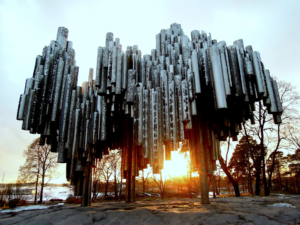
Sibelius monumnet Helsinki showing organ pipes that are tree trunks of the forest

Photo Pixabay, Sibelious Monument,

Music becomes a voice for change

I have long believed that the arts serve purposes far beyond decoration. A painting can tell a story. A poem can preserve a memory. A novel can give a forgotten person a voice. Drama and dance are transient vehicles for storytelling. And music? Music can bring people together.  have seen something of this for myself in my travels. I have stood before the monument to Jean Sibelius in Helsinki, Finland, and I have visited Estonia. Standing in those places, knowing something of their history, gives a different meaning to the music. You begin to understand that these were not simply composers writing beautiful melodies. In times of oppression and uncertainty, music can become a vessel carrying the identity of an entire people.

Music when a nation finds its voice

Consider Finland. For more than six hundred years, Finland was part of the Swedish realm. In 1809, it passed from Sweden to the Russian Empire and became an autonomous Grand Duchy. During the nineteenth century, a growing Finnish cultural movement sought to strengthen a distinct national identity. The Kalevala compiled from Finnish oral poetry, became an important expression of that identity. Artists, writers, and musicians began to give Finland a language of its own, not necessarily a political language, but a cultural one.

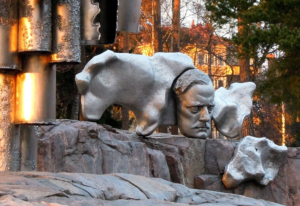
Sculpture of Sibelious Head, Helsinki

Photo Pixabay, Sibelious Monument

Then came Sibelius. In 1899, during a period of increasing Russian pressure and attempts at Russification, Sibelius composed the music that would become Finlandia It was originally part of a series of historical tableaux presented at the Press Celebrations in Helsinki. The final section, known as “Finland Awakes,” stirred something deep in the Finnish people. Finlandia became a symbol of Finnish nationalism. When I stood before the Sibelius monument, I wasn’t just viewing a memorial to a famous composer. It reminded me of what happens when art helps people remember their identity. Sibelius helped give Finland a sound, and sometimes people need a sound before finding a voice. Organ pipes represented the trees of the forest; forests go deep into the psyche of the Finnish people, a voice that resonated with them.Estonian Music Festival Stand

Estonia sang its way toward freedom

I experienced a similar feeling when I visited Estonia. Domination by powerful neighbors has marked Estonia’s history, and during the Soviet period, language and national identity were under pressure. Yet Estonia had an extraordinary cultural treasure: its singing tradition.

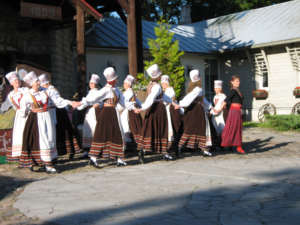
The Singing Revolution of the late 1980s demonstrated just how powerful that treasure could become. Hundreds of thousands of Estonians gathered at the Tallinn Song Festival Grounds and sang traditional and patriotic songs together. They sang Mu isamaa on minu arm, “Land of My Fathers, Land that I Love,” a song that had become deeply associated with Estonian identity. They also sang the patriotic songs of composer Alo Mattiisen.Music of Estonian Dancers

Estonian Folk Dancers, Video - Deryn van der Tang

This was nonviolence; they were not taking up arms, they were raising their voices. By 1989, the movement had grown into the remarkable Baltic Way, when people in Estonia, Latvia, and Lithuania joined hands in a human chain stretching across the three Baltic countries. Music had helped people remember they belonged to something larger than the political system that governed them.

The music that defied ruins

Then there is Sarajevo. During the terrible siege of Sarajevo in the 1990s, cellist Vedran Smailović became known as the “Cellist of Sarajevo.” After twenty-two people were killed while waiting for bread, Smailović returned to the devastated area and played Albinoni’s Adagio in G minor in their memory. Picture a city under attack. Amidst the broken buildings and people living in fear, a man sits with his cello and plays. The music could not stop the bombs, nor could it bring the dead back. But it declared something profound:

Beauty had not been destroyed. Human dignity had not been destroyed, and the human spirit had not been destroyed. That is the power of the arts.

Why do the arts matter?

When we talk about social change, we often think about politicians, protesters, legislation, and movements. And, of course, these matter. But underneath every movement is something deeper: a story about who we are and what we believe is worth preserving. Artists help us tell that story. A composer can give a nation a melody. Poets can preserve a language. Painters can capture a landscape that becomes part of a people’s memory. A storyteller can take the ordinary life of one family and reveal something universal about courage, suffering, and hope.

Perhaps that is why oppressive regimes have so often tried to control language, literature, music, and art. They understand something we sometimes forget: culture holds memory. And memory gives people identity.

The Bible tells us, “A word fitly spoken is like apples of gold in pictures of silver” (Proverbs 25:11).

Sometimes someone speaks, paints, sings, or writes that word.

The arts may not change the world overnight. Yet, they have the power to shift how people view the world. And once people see differently, they may begin to think differently, hope differently, and eventually act differently.

As I think about Finland, Estonia, and many other places I have traveled, I remember that the arts form a vital part of human society. They are part of our inheritance; they carry the stories of those who came before us. They inspire courage in those struggling today and plant seeds of hope for future generations. Perhaps that is why music has such extraordinary power.

A single voice may be silenced, a single instrument broken, yet a song alive in people’s hearts proves much harder to destroy.

And sometimes, when a people begin to sing together, the world begins to listen.

Join the discussion and follow me on these networks!

Man in long grass with dog

THE STORIES OF ORDINARY PEOPLE

There is an assumption that history belongs to extraordinary people. Our history books are filled with stories of kings and queens, presidents and generals, inventors and explorers. Their names become chapter headings, their portraits hang in galleries, and their achievements are remembered for generations.

History is carried by Ordinary People

Yet the longer I study history, the more convinced I become that its true heartbeat is found elsewhere. History is carried forward by ordinary people.

Most of us will never lead a nation, command an army, or have our names engraved on monuments. We live relatively quiet lives. We raise families, work hard, face disappointments, celebrate small victories, and try to leave the world a little better than we found it. There may seem to be nothing spectacular about our lives.

Stories of Ordinary Lives Inspire Us

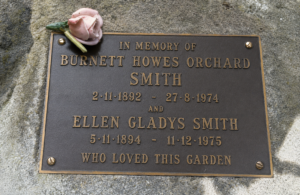
And yet, it is often these very lives that inspire us most. Now and then, we encounter the story of someone who has endured circumstances remarkably similar to our own. Perhaps they faced financial hardship, illness, rejection, grief, or failure. Somehow, through courage, perseverance, faith, and determination, they found a way forward. Their story becomes a light on our own path.Smith Headstone
 

I recently started reading “On Writing,” Stephen King’s memoir. Whatever one thinks of his novels, his personal story is compelling. He did not begin life with privilege or opportunity. He writes honestly about growing up in poverty, working tough jobs, struggling with addiction, and facing countless disappointments before finding success as a writer. What struck me most was not his fame. It was his perseverance.

His memoir reminded me that remarkable lives are often built through ordinary days; days filled with hard work, uncertainty, and the simple decision to keep going. That is true of so many people whose stories never become bestsellers.

House of Cherer

As I research my own family history and the lives of the 1820 Settlers in South Africa, I find myself increasingly drawn to these quiet acts of resilience. Most of them never imagined that anyone would one day write about their lives. They did what each new day required. Crossing oceans and burying loved ones. They rebuilt after droughts, wars, and disappointments. As circumstances changed, they adapted and carried hope into an uncertain future.Bothaville Home

 

History often overlooks such people because they did not shape great political events. Yet those events shaped them. Perhaps that is why their stories matter so much. The older I become, the more I realize we are strengthened not only by stories of extraordinary achievement but also by stories of ordinary faithfulness. As we discover that someone else has walked a road similar to ours and found the courage to continue, something changes within us. We believe that perhaps we can continue to.

The writer of Hebrews understood this beautifully when describing the faithful men and women who had gone before:

“Therefore, since we are surrounded by so great a cloud of witnesses, let us also lay aside every weight... and let us run with perseverance the race marked out for us.” (Hebrews 12:1)

The Cloud of Witnesses

The witnesses are more than just biblical heroes. They include countless ordinary people whose lives quietly testify of perseverance through the trials of life. Most likely every family and community has such witnesses.

Every reader carries within them a story that could encourage someone else. This is one of the reasons I am so passionate about narrative historical non-fiction. I would like to rescue ordinary lives from the margins of history. Not because they changed the world, but because they made a difference in the worlds around them.

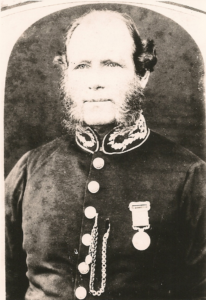
The mother’s courage, the father’s integrity, and the family’s overall resilience. A migrant’s hope for a better future and the hard work to build it. The quiet faith of a widow, a craftsman’s honesty and backbreaking labor. These are the stories that disappear from official history, yet they are the stories that build civilizations one generation at a time.Frederick Augustus Hoar
Jesus understood the significance of ordinary lives. He spent little time among the powerful of his day. Instead, he walked alongside fishermen, farmers, tax collectors, widows, shepherds, and laborers. He told stories about seeds, vineyards, lost coins, bread, and mustard trees because he knew that God’s Kingdom is revealed through ordinary people living ordinary lives with extraordinary faith.

I wonder what it would be like if history was written the same way. Ultimately, history is not merely the story of famous people. It is the narrative of all of us. And somewhere, perhaps years from now, an ordinary person may read the story of your life and discover the courage to write the next chapter of their own.

“Let us not become weary in doing good, for at the proper time we will reap a harvest if we do not give up.” Galatians 6:9.

What ordinary people’s stories reveal is that true greatness is more than just being recognized. Sometimes it is measured simply by faithfulness in persevering day after day through the grind.


1 Comment

  1. Karen Schmitt

    Wonderful! Thank you for this blog, post, Deryn. Family matters most of all.

    Reply

Submit a Comment

Your email address will not be published. Required fields are marked *

Join the discussion and follow me on these networks!

More From Crossing My Bridges

Sibelius monumnet Helsinki showing organ pipes that are tree trunks of the forest

Music becomes a voice for change

A single voice may be silenced, a single instrument broken, yet a song alive in people’s hearts proves much harder to destroy.
And sometimes, when a people begin to sing together, the world listens.

read more
Old Documents and phots

Why Every Family Has a History Worth Preserving

Every generation leaves something behind. A story, a lesson, or a memory, which is the thread connecting us to those who walked before us. Our responsibility is not only to discover those threads but to ensure they are not lost.

read more
Two Sparrows next to a sculpture of a secondary woman hold an open cage

The Spiritual Lessons Hidden in History

History is one of God’s great teachers. Its monuments speak. Its stories warn. Its failures humble us. Its victories encourage us. And if we have ears to hear, they continually point us back to the One who stands above every nation, every empire, and every generation, the Author of history itself.

read more

Pin It on Pinterest

Share This