Why Every Family Has a History Worth Preserving

By Deryn

Aug 27, 2026

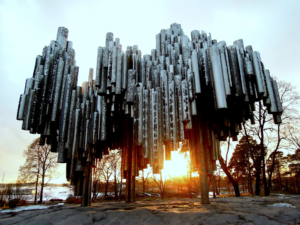
Sibelius monumnet Helsinki showing organ pipes that are tree trunks of the forest

Photo Pixabay, Sibelious Monument,

Music becomes a voice for change

I have long believed that the arts serve purposes far beyond decoration. A painting can tell a story. A poem can preserve a memory. A novel can give a forgotten person a voice. Drama and dance are transient vehicles for storytelling. And music? Music can bring people together.  have seen something of this for myself in my travels. I have stood before the monument to Jean Sibelius in Helsinki, Finland, and I have visited Estonia. Standing in those places, knowing something of their history, gives a different meaning to the music. You begin to understand that these were not simply composers writing beautiful melodies. In times of oppression and uncertainty, music can become a vessel carrying the identity of an entire people.

Music when a nation finds its voice

Consider Finland. For more than six hundred years, Finland was part of the Swedish realm. In 1809, it passed from Sweden to the Russian Empire and became an autonomous Grand Duchy. During the nineteenth century, a growing Finnish cultural movement sought to strengthen a distinct national identity. The Kalevala compiled from Finnish oral poetry, became an important expression of that identity. Artists, writers, and musicians began to give Finland a language of its own, not necessarily a political language, but a cultural one.

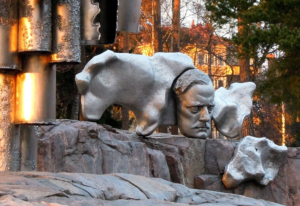
Sculpture of Sibelious Head, Helsinki

Photo Pixabay, Sibelious Monument

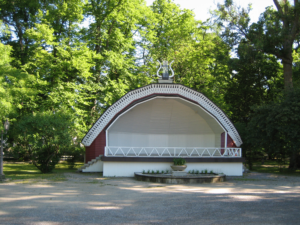
Then came Sibelius. In 1899, during a period of increasing Russian pressure and attempts at Russification, Sibelius composed the music that would become Finlandia It was originally part of a series of historical tableaux presented at the Press Celebrations in Helsinki. The final section, known as “Finland Awakes,” stirred something deep in the Finnish people. Finlandia became a symbol of Finnish nationalism. When I stood before the Sibelius monument, I wasn’t just viewing a memorial to a famous composer. It reminded me of what happens when art helps people remember their identity. Sibelius helped give Finland a sound, and sometimes people need a sound before finding a voice. Organ pipes represented the trees of the forest; forests go deep into the psyche of the Finnish people, a voice that resonated with them.Estonian Music Festival Stand

Estonia sang its way toward freedom

I experienced a similar feeling when I visited Estonia. Domination by powerful neighbors has marked Estonia’s history, and during the Soviet period, language and national identity were under pressure. Yet Estonia had an extraordinary cultural treasure: its singing tradition.

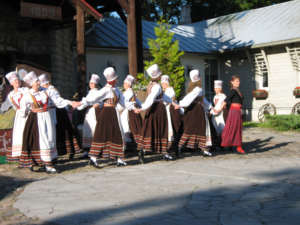
The Singing Revolution of the late 1980s demonstrated just how powerful that treasure could become. Hundreds of thousands of Estonians gathered at the Tallinn Song Festival Grounds and sang traditional and patriotic songs together. They sang Mu isamaa on minu arm, “Land of My Fathers, Land that I Love,” a song that had become deeply associated with Estonian identity. They also sang the patriotic songs of composer Alo Mattiisen.Music of Estonian Dancers

Estonian Folk Dancers, Video - Deryn van der Tang

This was nonviolence; they were not taking up arms, they were raising their voices. By 1989, the movement had grown into the remarkable Baltic Way, when people in Estonia, Latvia, and Lithuania joined hands in a human chain stretching across the three Baltic countries. Music had helped people remember they belonged to something larger than the political system that governed them.

The music that defied ruins

Then there is Sarajevo. During the terrible siege of Sarajevo in the 1990s, cellist Vedran Smailović became known as the “Cellist of Sarajevo.” After twenty-two people were killed while waiting for bread, Smailović returned to the devastated area and played Albinoni’s Adagio in G minor in their memory. Picture a city under attack. Amidst the broken buildings and people living in fear, a man sits with his cello and plays. The music could not stop the bombs, nor could it bring the dead back. But it declared something profound:

Beauty had not been destroyed. Human dignity had not been destroyed, and the human spirit had not been destroyed. That is the power of the arts.

Why do the arts matter?

When we talk about social change, we often think about politicians, protesters, legislation, and movements. And, of course, these matter. But underneath every movement is something deeper: a story about who we are and what we believe is worth preserving. Artists help us tell that story. A composer can give a nation a melody. Poets can preserve a language. Painters can capture a landscape that becomes part of a people’s memory. A storyteller can take the ordinary life of one family and reveal something universal about courage, suffering, and hope.

Perhaps that is why oppressive regimes have so often tried to control language, literature, music, and art. They understand something we sometimes forget: culture holds memory. And memory gives people identity.

The Bible tells us, “A word fitly spoken is like apples of gold in pictures of silver” (Proverbs 25:11).

Sometimes someone speaks, paints, sings, or writes that word.

The arts may not change the world overnight. Yet, they have the power to shift how people view the world. And once people see differently, they may begin to think differently, hope differently, and eventually act differently.

As I think about Finland, Estonia, and many other places I have traveled, I remember that the arts form a vital part of human society. They are part of our inheritance; they carry the stories of those who came before us. They inspire courage in those struggling today and plant seeds of hope for future generations. Perhaps that is why music has such extraordinary power.

A single voice may be silenced, a single instrument broken, yet a song alive in people’s hearts proves much harder to destroy.

And sometimes, when a people begin to sing together, the world begins to listen.

Join the discussion and follow me on these networks!

Old Documents and phots

Discovering the stories hidden between the names and dates

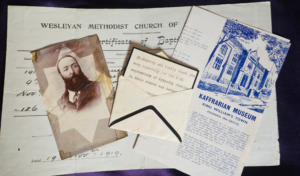
Every family has a history. Some families have boxes of letters, old photographs, diaries, family Bibles, and carefully preserved documents. Others have little more than a few names, a faded photograph, and a story that Grandma used to tell.

But every family has a story. I believe that every family has a history worth preserving. Perhaps that is one reason I find researching and writing narrative historical non-fiction so much fun. I never quite know where the next clue will take me. I will begin with one person or a place.

I will research where a particular ancestor lived, and suddenly that opens a door to another part of the story. Perhaps I discover who owned the property before them, what was happening in the town at that time, or why the family moved on. One piece of information leads to another, and before long I am following a trail that I could never have predicted when I began.

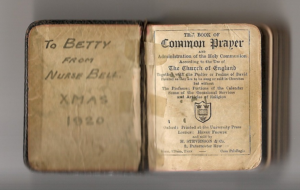
Detective Work Uncovering the StorySmall Common Book of Prayer

It feels rather like detective work. Sometimes the evidence changes the story I thought I was going to write. I may have imagined that a particular event happened one way, only to discover another document or letter that makes me rethink the whole sequence. Rather than being disappointed, I find this exciting. The new evidence gives me another angle, another possibility, another piece of the puzzle. That is where narrative historical non-fiction becomes fascinating.

The historical timeline is my skeleton. I need to know where my character was, when they were there, how old they were, what was happening around them, and what could realistically have happened at that point in their life. Age matters enormously. You cannot have a two-year-old confronting the king!

It sounds obvious, but when you are working with generations of people, dates, places, and events, it is easy to lose track of who could have been where and when. Keeping the historical timeline firmly anchored helps me distinguish between what is possible and what belongs only in my imagination. Once that skeleton is established, I can begin to build the surrounding story. The known facts become the framework. The documented events provide the foundation. Then I imagine the conversations, emotions, reactions, and circumstances that might plausibly have surrounded those events.

Crafting the Story

That is where creativity begins. I have to inhabit the world of the people I am writing about. What might they have seen, feared, or hoped for? How might a particular event have affected a mother, a father, a young child, or an elderly relative?

Of course, I have to be careful. I can only imagine the conversations they had and not claim that they said what they did! I cannot change historical events simply because it makes the story more convenient. The imagination has to work within the boundaries of what is known. But within those boundaries, there is still an extraordinary amount of room for creativity. And that, to me, is the joy of narrative historical non-fiction.

The Writing and Editing Process

The writing itself, however, is only one part of the process. The first draft is usually the exciting part. There is a wonderful buzz when the pieces come together, and the story lives on the page. Then comes the editing; that is a different story altogether!

Sometimes I have to go back over a piece three or four times because I have discovered an error, received feedback, or realized that the structure isn’t quite working. I may discover that a theme I thought was central isn’t coming through clearly enough. Perhaps one of my characters is behaving in a way that doesn’t fit the evidence I have uncovered. Then I have to stop and rethink.

I am learning not to panic when this happens. Sometimes the answer doesn’t come while I am sitting at my desk staring at the manuscript. It may come while I am washing dishes, walking, or doing something unrelated to writing. Suddenly, there it is: the missing connection, the solution to the problem, the reason a particular section wasn’t working.

I am learning to trust the process. Writing, I have discovered, is rather like going to the gym. The first burst of creativity feels exhilarating. Then the hard work begins. Editing stretches you. Research stretches you. Rewriting stretches you. Sometimes you discover weaknesses you didn’t know were there. But perhaps that is precisely the point. The stretching makes the story stronger.

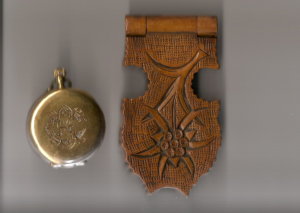
Preserving the Footprints and DNA of our Family HistoryOld Watch and Case

And the same is true of preserving family history. When we take the time to research the people who came before us, we often discover that their lives were far more complicated, courageous, and interesting than we ever imagined. We discover migrations and marriages, disappointments, and triumphs, losses and new beginnings. We discovered our ancestors were not simply names on a family tree. They were people.

People who had hopes and fears; sometimes they faced difficult or impossible choices. They raised children in uncertain times, or had to give up their children to give them a better life. They endured circumstances we may struggle to imagine.

And yet, when we discover what they survived, we find a little more courage for our own journey. If they had not made those choices, we might not be here today. That is why I believe every family has a history worth preserving. It doesn’t have to be the story of famous people. In fact, our ancestors could have been infamous! It doesn’t have to contain great wealth or spectacular achievements. It simply has to contain human lives. Lives that breathed and struggled but had the grit and the faith to keep going.

The Legacy you Leave when you Tell Your Family Stories

Because every generation leaves something behind. A story, a lesson, or a memory, which is the thread connecting us to those who walked before us. Our responsibility is not only to discover those threads but to ensure they are not lost.

As the Psalmist reminds us:

“We will not hide them from their children; we will tell the next generation the praiseworthy deeds of the Lord.” Psalm 78:4

When we preserve our family stories, we are doing more than looking backward. We are giving the next generation roots, and knowing where our roots lie gives us the courage to grow.

What family stories can you follow up on? On a visit to the Pueblo Cultural Center and Museum in Albuquerque, New Mexico, and the village in Taos, I was transfixed by the Pablo Storyteller Sculptures. Storytelling is embedded in their culture. You can read that story here. Their culture is preserved not only in the stories, but also in their artwork.


0 Comments

Submit a Comment

Your email address will not be published. Required fields are marked *

Join the discussion and follow me on these networks!

More From Crossing My Bridges

Sibelius monumnet Helsinki showing organ pipes that are tree trunks of the forest

Music becomes a voice for change

A single voice may be silenced, a single instrument broken, yet a song alive in people’s hearts proves much harder to destroy.
And sometimes, when a people begin to sing together, the world listens.

read more...
Man in long grass with dog

THE STORIES OF ORDINARY PEOPLE

What ordinary people’s stories reveal is that true greatness is more than just being recognized. Sometimes it is measured simply by faithfulness in persevering day after day through the grind.

read more...
Two Sparrows next to a sculpture of a secondary woman hold an open cage

The Spiritual Lessons Hidden in History

History is one of God’s great teachers. Its monuments speak. Its stories warn. Its failures humble us. Its victories encourage us. And if we have ears to hear, they continually point us back to the One who stands above every nation, every empire, and every generation, the Author of history itself.

read more...

Pin It on Pinterest

Share This