×

THE STORIES OF ORDINARY PEOPLE
What ordinary people’s stories reveal is that true greatness is more than just being recognized. Sometimes it is measured simply by faithfulness in persevering day after day through the grind.
By Deryn
Aug 27, 2026
Join the discussion and follow me on these networks!
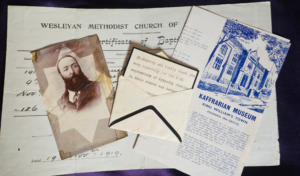
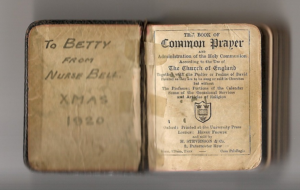
Every family has a history. Some families have boxes of letters, old photographs, diaries, family Bibles, and carefully preserved documents. Others have little more than a few names, a faded photograph, and a story that Grandma used to tell.
But every family has a story. I believe that every family has a history worth preserving. Perhaps that is one reason I find researching and writing narrative historical non-fiction so much fun. I never quite know where the next clue will take me. I will begin with one person or a place.
I will research where a particular ancestor lived, and suddenly that opens a door to another part of the story. Perhaps I discover who owned the property before them, what was happening in the town at that time, or why the family moved on. One piece of information leads to another, and before long I am following a trail that I could never have predicted when I began.
It feels rather like detective work. Sometimes the evidence changes the story I thought I was going to write. I may have imagined that a particular event happened one way, only to discover another document or letter that makes me rethink the whole sequence. Rather than being disappointed, I find this exciting. The new evidence gives me another angle, another possibility, another piece of the puzzle. That is where narrative historical non-fiction becomes fascinating.
The historical timeline is my skeleton. I need to know where my character was, when they were there, how old they were, what was happening around them, and what could realistically have happened at that point in their life. Age matters enormously. You cannot have a two-year-old confronting the king!
It sounds obvious, but when you are working with generations of people, dates, places, and events, it is easy to lose track of who could have been where and when. Keeping the historical timeline firmly anchored helps me distinguish between what is possible and what belongs only in my imagination. Once that skeleton is established, I can begin to build the surrounding story. The known facts become the framework. The documented events provide the foundation. Then I imagine the conversations, emotions, reactions, and circumstances that might plausibly have surrounded those events.
That is where creativity begins. I have to inhabit the world of the people I am writing about. What might they have seen, feared, or hoped for? How might a particular event have affected a mother, a father, a young child, or an elderly relative?
Of course, I have to be careful. I can only imagine the conversations they had and not claim that they said what they did! I cannot change historical events simply because it makes the story more convenient. The imagination has to work within the boundaries of what is known. But within those boundaries, there is still an extraordinary amount of room for creativity. And that, to me, is the joy of narrative historical non-fiction.
The writing itself, however, is only one part of the process. The first draft is usually the exciting part. There is a wonderful buzz when the pieces come together, and the story lives on the page. Then comes the editing; that is a different story altogether!
Sometimes I have to go back over a piece three or four times because I have discovered an error, received feedback, or realized that the structure isn’t quite working. I may discover that a theme I thought was central isn’t coming through clearly enough. Perhaps one of my characters is behaving in a way that doesn’t fit the evidence I have uncovered. Then I have to stop and rethink.
I am learning not to panic when this happens. Sometimes the answer doesn’t come while I am sitting at my desk staring at the manuscript. It may come while I am washing dishes, walking, or doing something unrelated to writing. Suddenly, there it is: the missing connection, the solution to the problem, the reason a particular section wasn’t working.
I am learning to trust the process. Writing, I have discovered, is rather like going to the gym. The first burst of creativity feels exhilarating. Then the hard work begins. Editing stretches you. Research stretches you. Rewriting stretches you. Sometimes you discover weaknesses you didn’t know were there. But perhaps that is precisely the point. The stretching makes the story stronger.
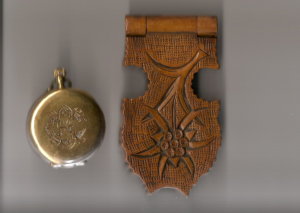
And the same is true of preserving family history. When we take the time to research the people who came before us, we often discover that their lives were far more complicated, courageous, and interesting than we ever imagined. We discover migrations and marriages, disappointments, and triumphs, losses and new beginnings. We discovered our ancestors were not simply names on a family tree. They were people.
People who had hopes and fears; sometimes they faced difficult or impossible choices. They raised children in uncertain times, or had to give up their children to give them a better life. They endured circumstances we may struggle to imagine.
And yet, when we discover what they survived, we find a little more courage for our own journey. If they had not made those choices, we might not be here today. That is why I believe every family has a history worth preserving. It doesn’t have to be the story of famous people. In fact, our ancestors could have been infamous! It doesn’t have to contain great wealth or spectacular achievements. It simply has to contain human lives. Lives that breathed and struggled but had the grit and the faith to keep going.
Because every generation leaves something behind. A story, a lesson, or a memory, which is the thread connecting us to those who walked before us. Our responsibility is not only to discover those threads but to ensure they are not lost.
As the Psalmist reminds us:
“We will not hide them from their children; we will tell the next generation the praiseworthy deeds of the Lord.” Psalm 78:4
When we preserve our family stories, we are doing more than looking backward. We are giving the next generation roots, and knowing where our roots lie gives us the courage to grow.
What family stories can you follow up on? On a visit to the Pueblo Cultural Center and Museum in Albuquerque, New Mexico, and the village in Taos, I was transfixed by the Pablo Storyteller Sculptures. Storytelling is embedded in their culture. You can read that story here. Their culture is preserved not only in the stories, but also in their artwork.
Join the discussion and follow me on these networks!
What ordinary people’s stories reveal is that true greatness is more than just being recognized. Sometimes it is measured simply by faithfulness in persevering day after day through the grind.

History is one of God’s great teachers. Its monuments speak. Its stories warn. Its failures humble us. Its victories encourage us. And if we have ears to hear, they continually point us back to the One who stands above every nation, every empire, and every generation, the Author of history itself.

Family stories are, perhaps, our own memorial stones. They remind us of who we are. They steady us when life becomes uncertain. And they help us understand that history is never merely something behind us; it continues to live quietly within us.
0 Comments