Final Chapter of My Adventures in Australia 2020

By Deryn

Jul 11, 2020

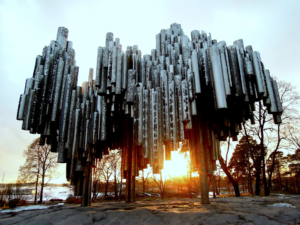
Sibelius monumnet Helsinki showing organ pipes that are tree trunks of the forest

Photo Pixabay, Sibelious Monument,

Music becomes a voice for change

I have long believed that the arts serve purposes far beyond decoration. A painting can tell a story. A poem can preserve a memory. A novel can give a forgotten person a voice. Drama and dance are transient vehicles for storytelling. And music? Music can bring people together.  have seen something of this for myself in my travels. I have stood before the monument to Jean Sibelius in Helsinki, Finland, and I have visited Estonia. Standing in those places, knowing something of their history, gives a different meaning to the music. You begin to understand that these were not simply composers writing beautiful melodies. In times of oppression and uncertainty, music can become a vessel carrying the identity of an entire people.

Music when a nation finds its voice

Consider Finland. For more than six hundred years, Finland was part of the Swedish realm. In 1809, it passed from Sweden to the Russian Empire and became an autonomous Grand Duchy. During the nineteenth century, a growing Finnish cultural movement sought to strengthen a distinct national identity. The Kalevala compiled from Finnish oral poetry, became an important expression of that identity. Artists, writers, and musicians began to give Finland a language of its own, not necessarily a political language, but a cultural one.

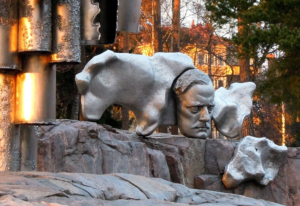
Sculpture of Sibelious Head, Helsinki

Photo Pixabay, Sibelious Monument

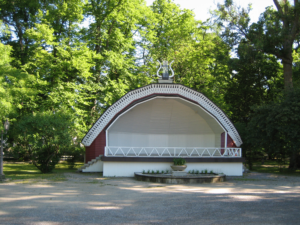
Then came Sibelius. In 1899, during a period of increasing Russian pressure and attempts at Russification, Sibelius composed the music that would become Finlandia It was originally part of a series of historical tableaux presented at the Press Celebrations in Helsinki. The final section, known as “Finland Awakes,” stirred something deep in the Finnish people. Finlandia became a symbol of Finnish nationalism. When I stood before the Sibelius monument, I wasn’t just viewing a memorial to a famous composer. It reminded me of what happens when art helps people remember their identity. Sibelius helped give Finland a sound, and sometimes people need a sound before finding a voice. Organ pipes represented the trees of the forest; forests go deep into the psyche of the Finnish people, a voice that resonated with them.Estonian Music Festival Stand

Estonia sang its way toward freedom

I experienced a similar feeling when I visited Estonia. Domination by powerful neighbors has marked Estonia’s history, and during the Soviet period, language and national identity were under pressure. Yet Estonia had an extraordinary cultural treasure: its singing tradition.

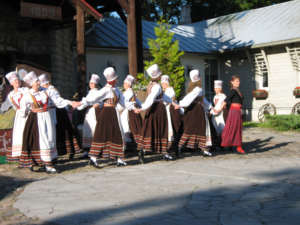
The Singing Revolution of the late 1980s demonstrated just how powerful that treasure could become. Hundreds of thousands of Estonians gathered at the Tallinn Song Festival Grounds and sang traditional and patriotic songs together. They sang Mu isamaa on minu arm, “Land of My Fathers, Land that I Love,” a song that had become deeply associated with Estonian identity. They also sang the patriotic songs of composer Alo Mattiisen.Music of Estonian Dancers

Estonian Folk Dancers, Video - Deryn van der Tang

This was nonviolence; they were not taking up arms, they were raising their voices. By 1989, the movement had grown into the remarkable Baltic Way, when people in Estonia, Latvia, and Lithuania joined hands in a human chain stretching across the three Baltic countries. Music had helped people remember they belonged to something larger than the political system that governed them.

The music that defied ruins

Then there is Sarajevo. During the terrible siege of Sarajevo in the 1990s, cellist Vedran Smailović became known as the “Cellist of Sarajevo.” After twenty-two people were killed while waiting for bread, Smailović returned to the devastated area and played Albinoni’s Adagio in G minor in their memory. Picture a city under attack. Amidst the broken buildings and people living in fear, a man sits with his cello and plays. The music could not stop the bombs, nor could it bring the dead back. But it declared something profound:

Beauty had not been destroyed. Human dignity had not been destroyed, and the human spirit had not been destroyed. That is the power of the arts.

Why do the arts matter?

When we talk about social change, we often think about politicians, protesters, legislation, and movements. And, of course, these matter. But underneath every movement is something deeper: a story about who we are and what we believe is worth preserving. Artists help us tell that story. A composer can give a nation a melody. Poets can preserve a language. Painters can capture a landscape that becomes part of a people’s memory. A storyteller can take the ordinary life of one family and reveal something universal about courage, suffering, and hope.

Perhaps that is why oppressive regimes have so often tried to control language, literature, music, and art. They understand something we sometimes forget: culture holds memory. And memory gives people identity.

The Bible tells us, “A word fitly spoken is like apples of gold in pictures of silver” (Proverbs 25:11).

Sometimes someone speaks, paints, sings, or writes that word.

The arts may not change the world overnight. Yet, they have the power to shift how people view the world. And once people see differently, they may begin to think differently, hope differently, and eventually act differently.

As I think about Finland, Estonia, and many other places I have traveled, I remember that the arts form a vital part of human society. They are part of our inheritance; they carry the stories of those who came before us. They inspire courage in those struggling today and plant seeds of hope for future generations. Perhaps that is why music has such extraordinary power.

A single voice may be silenced, a single instrument broken, yet a song alive in people’s hearts proves much harder to destroy.

And sometimes, when a people begin to sing together, the world begins to listen.

Join the discussion and follow me on these networks!

The first weekend restrictions were lifted on visiting parks for recreation, we went back to the Khola Botanical Gardens to walk. It was as beautiful as ever, with the water lily pond where a cute little turtle climbed onto a lily pad and then jumped off again. We walked the circuitous route down to the river and back getting our fair share of cardio exercise!  The following weekend we were able to go to Slaughter Falls a lovely parkland area below Mt Coot-ha where we walked along a winding trail where I came across the tallest, straightest tree I have ever seen! The Falls were dry but we enjoyed the walk amongst all the beautiful indigenous trees. On the way home, we went to the look out on Mt Coot-ha for a cup of coffee which we enjoyed sitting on the lawn overlooking the city.  

Another Sunday, we were able to go to Springfield dam, which we walked around enjoying the sunshine and fresh air watching the fish swimming beneath the water lilies and waterfowl paddling along the edges of the lake dipping for food. The water dragons were out in force basking in the sunshine. We went on a bit further to Orion Park, to walk along the trail, I nearly stood on a snake that looked just like a twig, which sent me into flight mode screaming as I ran away. My daughter though it was a poisonous brown snake. After that scare we made our way slowly back along the trail to the car after a lovely weekend out of the house! 

The Kohla Botanical Gardens became our favorite ‘get out of the house’ place to go as it was not too far away in Ipswitch and it is set in such beautiful scenery. We also took a trip down to the Brisbane River at Anstead where we enjoyed a walk along the river bank, saw a couple of bush turkeys running around and my grandson did some fishing.  We also had several walks in the Anstead Bush Reserve. My daughter and I walked down the trail to Sugars Quarry, it was a very steep road so I stopped halfway as I knew I would have to walk up it again!  We walked a very long circuitous route back to the car park instead. 

When we were allowed to drive a bit further we decided to take a trip up to Toowoomba about 120 miles away, where we looked at the beautiful vistas from the top of the mountain, it was very cold up there so we went into the town for a cup of hot coffee. We went to see the windmill museum so I could photograph the old windmills, which have special memories for me.  I also wanted to see the Japanese Gardens but they were closed, we did walk around the park though, looking at flowers before heading home. We did the scenic drive back to Brisbane along the Lockyer Valley which was badly flooded in 2011. This rich fertile valley is the breadbasket of Queensland, mile upon mile of irrigated crops and agricultural lands. 

My penultimate weekend, we went into Brisbane so I could say goodbye to the city. We drove to New Farm and walked through the gardens to the Avatar Tree, so my grandson could climb it. This huge Fig Tree is a feature, with a children’s park built around it, and where I have made a memory of my grandson each time I visit. We walked down to the City Cat Quay to take a ride up the river, this was a wonderful experience as we looked at the city skyscrapers and the skyline from the comfort of our seats. We disembarked at South Bank and walked through the gardens were the bougainvillea were out which was what I had hoped to see. After a lovely cup of hot coffee, we slowly made our way back to the pier to catch the City Cat back up the river to New Farm.  I was sad that COVID had prevented a visit into the shopping precinct of Brisbane, but guess it also saved me some money!  It was so good to have spent this time with my family making memories, as who knows if I will ever come back this way again! 

2 Comments

  1. Betsy McPeak

    I love the names of places in Australia! Mt Coot-ha and Kohla. Sugars Quarry, Avatar Tree and Toowoomba. Is the indigenous language still spoken in places?
    What rich sights and experiences you had!!! I’ll bet there will be inspiration coming from those months for the rest of your life. You are blessed!

    Reply
    • Deryn

      Hi Betsy, So glad you enjoyed this last post. Yes the place names are lovely Aboriginal nmaes. There may be the language spoken in the Northern Territories, but from what I see the children learn at school, it is Japanese or Chinese as a second language. Thre is much to appreciate with the aboriginal culture I love the Dreamtime Stories and art. Yes, I have a lifetime of memories stored.

      Blessings Deryn

      Reply

Trackbacks/Pingbacks

  1. God on the Mountain is God and in the Forest - CROSSING MY BRIDGES - […] who took me to their favorite place on earth, which he called “Jerusalem Hollow,” part of the Boranup Karri…

Submit a Comment

Your email address will not be published. Required fields are marked *

Join the discussion and follow me on these networks!

More From Crossing My Bridges

Sibelius monumnet Helsinki showing organ pipes that are tree trunks of the forest

Music becomes a voice for change

A single voice may be silenced, a single instrument broken, yet a song alive in people’s hearts proves much harder to destroy.
And sometimes, when a people begin to sing together, the world listens.

read more...
Man in long grass with dog

THE STORIES OF ORDINARY PEOPLE

What ordinary people’s stories reveal is that true greatness is more than just being recognized. Sometimes it is measured simply by faithfulness in persevering day after day through the grind.

read more...

Pin It on Pinterest

Share This