Resources for Healing Spiritual Wounds

By Deryn

May 9, 2021

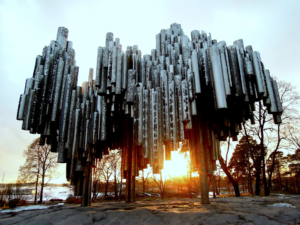
Sibelius monumnet Helsinki showing organ pipes that are tree trunks of the forest

Photo Pixabay, Sibelious Monument,

Music becomes a voice for change

I have long believed that the arts serve purposes far beyond decoration. A painting can tell a story. A poem can preserve a memory. A novel can give a forgotten person a voice. Drama and dance are transient vehicles for storytelling. And music? Music can bring people together.  have seen something of this for myself in my travels. I have stood before the monument to Jean Sibelius in Helsinki, Finland, and I have visited Estonia. Standing in those places, knowing something of their history, gives a different meaning to the music. You begin to understand that these were not simply composers writing beautiful melodies. In times of oppression and uncertainty, music can become a vessel carrying the identity of an entire people.

Music when a nation finds its voice

Consider Finland. For more than six hundred years, Finland was part of the Swedish realm. In 1809, it passed from Sweden to the Russian Empire and became an autonomous Grand Duchy. During the nineteenth century, a growing Finnish cultural movement sought to strengthen a distinct national identity. The Kalevala compiled from Finnish oral poetry, became an important expression of that identity. Artists, writers, and musicians began to give Finland a language of its own, not necessarily a political language, but a cultural one.

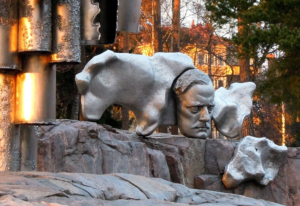
Sculpture of Sibelious Head, Helsinki

Photo Pixabay, Sibelious Monument

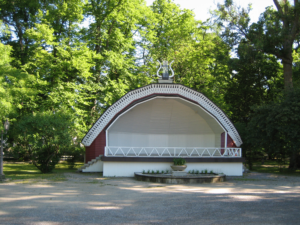
Then came Sibelius. In 1899, during a period of increasing Russian pressure and attempts at Russification, Sibelius composed the music that would become Finlandia It was originally part of a series of historical tableaux presented at the Press Celebrations in Helsinki. The final section, known as “Finland Awakes,” stirred something deep in the Finnish people. Finlandia became a symbol of Finnish nationalism. When I stood before the Sibelius monument, I wasn’t just viewing a memorial to a famous composer. It reminded me of what happens when art helps people remember their identity. Sibelius helped give Finland a sound, and sometimes people need a sound before finding a voice. Organ pipes represented the trees of the forest; forests go deep into the psyche of the Finnish people, a voice that resonated with them.Estonian Music Festival Stand

Estonia sang its way toward freedom

I experienced a similar feeling when I visited Estonia. Domination by powerful neighbors has marked Estonia’s history, and during the Soviet period, language and national identity were under pressure. Yet Estonia had an extraordinary cultural treasure: its singing tradition.

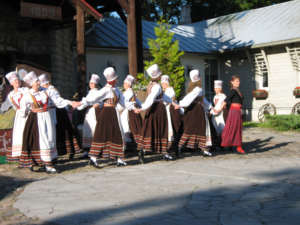
The Singing Revolution of the late 1980s demonstrated just how powerful that treasure could become. Hundreds of thousands of Estonians gathered at the Tallinn Song Festival Grounds and sang traditional and patriotic songs together. They sang Mu isamaa on minu arm, “Land of My Fathers, Land that I Love,” a song that had become deeply associated with Estonian identity. They also sang the patriotic songs of composer Alo Mattiisen.Music of Estonian Dancers

Estonian Folk Dancers, Video - Deryn van der Tang

This was nonviolence; they were not taking up arms, they were raising their voices. By 1989, the movement had grown into the remarkable Baltic Way, when people in Estonia, Latvia, and Lithuania joined hands in a human chain stretching across the three Baltic countries. Music had helped people remember they belonged to something larger than the political system that governed them.

The music that defied ruins

Then there is Sarajevo. During the terrible siege of Sarajevo in the 1990s, cellist Vedran Smailović became known as the “Cellist of Sarajevo.” After twenty-two people were killed while waiting for bread, Smailović returned to the devastated area and played Albinoni’s Adagio in G minor in their memory. Picture a city under attack. Amidst the broken buildings and people living in fear, a man sits with his cello and plays. The music could not stop the bombs, nor could it bring the dead back. But it declared something profound:

Beauty had not been destroyed. Human dignity had not been destroyed, and the human spirit had not been destroyed. That is the power of the arts.

Why do the arts matter?

When we talk about social change, we often think about politicians, protesters, legislation, and movements. And, of course, these matter. But underneath every movement is something deeper: a story about who we are and what we believe is worth preserving. Artists help us tell that story. A composer can give a nation a melody. Poets can preserve a language. Painters can capture a landscape that becomes part of a people’s memory. A storyteller can take the ordinary life of one family and reveal something universal about courage, suffering, and hope.

Perhaps that is why oppressive regimes have so often tried to control language, literature, music, and art. They understand something we sometimes forget: culture holds memory. And memory gives people identity.

The Bible tells us, “A word fitly spoken is like apples of gold in pictures of silver” (Proverbs 25:11).

Sometimes someone speaks, paints, sings, or writes that word.

The arts may not change the world overnight. Yet, they have the power to shift how people view the world. And once people see differently, they may begin to think differently, hope differently, and eventually act differently.

As I think about Finland, Estonia, and many other places I have traveled, I remember that the arts form a vital part of human society. They are part of our inheritance; they carry the stories of those who came before us. They inspire courage in those struggling today and plant seeds of hope for future generations. Perhaps that is why music has such extraordinary power.

A single voice may be silenced, a single instrument broken, yet a song alive in people’s hearts proves much harder to destroy.

And sometimes, when a people begin to sing together, the world begins to listen.

Join the discussion and follow me on these networks!

What book or e-book would I recommend to my readers this week is the challenge for Welcome to My World? That is a tough question to answer as I have read at least five excellent books this past month in doing the research for my focus articles on Spiritual Wounding, Generational Trauma, and Child Abuse for April.

Healing Spiritual Wounds

I will tell you a bit about each of them, and you can decide if you want to read any. “Healing Spiritual Wounds," by Carol Howard Merrit. Merrit shares her own story of living in a home where abusive parental practices took place following the teachings of their fundamentalist church. I followed her story through the process of her anger, grief, and shame to reconnecting with God and finding her healing in His love. Sadly, what she writes about has been common practice in many fundamentalist church groups.

Sacred Wounds

Another more practical book was Sacred Wounds by Theresa B Pasquale. This book deals with this sensitive subject, spiritual wounding, and trauma. She has shed a lot of light on the subject, which is close to her heart. She is professionally qualified to write on this subject, and anyone who has had to deal with spiritual abuse or trauma will find the book most helpful with examples from life. People coping with or helping people through their issues with religion and church would find the insight most beneficial. To know where to back off and where to support. Spiritual abuse had a lasting effect on people's lives and how they can deal with their problems when their concept of God has been corrupted. If you need help for releasing some of these wounds, God has gifted some people to help you, I am happy to share this article by Justina Ford on being Confidently Visible Despite Spiritual Wounding.

Conditions of the Heart

Healing Power Through Spirit Born Emotions

For people who want to find ways to connect to God and heal from this type of trauma, a beneficial book with many different angles to approach healing is “Unleashing Healing Power through Spirit-Born Emotions” by Mark Virkler and Charity Kayembe.  One of the most exciting things in one of his approaches is that God speaks through images. As an artist, I have always found that I have been closer to God visually. This was in significant conflict with my upbringing when it was only The Word, which quite often, to be truthful, I did not understand! This book shows the numerous ways in which we can communicate with our Creator, which is really quite liberating.

What is the Bible and How Do we Understand it?

Life has certainly moved on since I was a child. Technology has changed so much of how we view the world that was not available to our forebears. The millennial generation thinks and experiences the world in ways that we never could. They also have many questions about the Bible and the Church, so my church here in Washington DC is doing a seminar on hermeneutics. We used the book by Dennis R Edwards, "What is the Bible and How Do We Understand it?" His books on radical faith and the Jesus Way certainly shed a lot of light on many of the problems we have in applying Bible passages to modern life and made so much sense in light of the previous books mentioned.

The Body Keeps the Score

My research converged with listening to a weeklong series of lectures on Dealing with Trauma by a team from the National Institute for the Clinical Application of Behavioral Medicine. Their scientific experience verified what I had been learning from the above books but made the picture a lot clearer in the case of the developing child's brain. Children are helpless to escape from traumatic or ongoing trauma, developing their own mechanisms, which become a learned behavior in their bodies. “The Body Keeps the Score” by Bessel van der Kolk is an excellent resource for learning about this.

Deconstructing Old Beliefs

There are other good resources for counseling from Spiritual Abuse. Church as Refuge is leading the movement to bring this to light and bring healing to those who have been taught a theology that had made them doubt their relationship with God. Listen to a short video excerpt by Rev Megan Cox of "Give Her Wings" or check out the website if you know of someone who might need this kind of help.

Memory and Dream Artwork

In January, I signed up to attend classes for Memory and Dreamwork in Drawing with a lecturer at the Royal School of Drawing in London for May. In the very first lesson, I had chosen a nightmare of vegetables chasing me I had had as a small child to work with. Everything fell into place with the eating and stomach problems I had experienced when I looked through the lens of what I had just been reading and listening to!  My recent work with the elderly who had dementia made me acutely aware that unresolved trauma can severely impact you in old age. I wanted to deal with any issues that might arise if I got dementia, hence my research. By the same token, I wanted to bring this awareness to the forefront to help point people in the right direction to get the help they might need before it is too late.

I could not choose just one book because one book would not cover the scope of this vast subject with so many facets, as everyone is unique. These books are a good starting point for people interested in the topic or who know someone who is struggling with any aspect of PTSD. Soaked in prayer as to which one will be most helpful in moving you forward. It is also crucial to seek counsel to find therapists who are specialists in PTSD with the spiritual aspect. Being able to reconnect to God is part of the healing process.

It is crucial to seek counsel to find therapists who are specialists in PSDT with the spiritual aspect. Being able to reconnect to God is part of the healing process.

What are your thoughts on PSDT and trauma? Do you think they are original sin? Do you believe that the church can help or harm in the healing of people who have PSDT?

5 Comments

  1. Yvonne

    Thank you for the recommendation of the books, and also making clear what abuse and trauma is, and how it affects us.

    Reply
  2. Dianne Marie Andre

    I’m impressed you’ve read five books this month and it’s only the 10th.

    Reply
    • Deryn

      It was the prior month up to then! That would be too much like speed reading!

      Reply
  3. Shirley Corder

    Thanks for the short blurb on five different books. You ask for my thoughts on PSTD. Problem is, before I can answer that I need to know what PSTD stands for. I looked for the answer in your post but can’t find it. Am I just switched off? (Very possible!) However, in view of the letters almost certainly stand for a disorder – and the three other letters COULD be Post Stress Traumatic … how am I doing? And that would make it the same as PTSD – then no, I definitely don’t see this as original sin. And as far as the church helping, that totally depends on having the qualitifed people available to help. I believe so much harm is done at the hands of well-meaning Christians who take upon themselves the role of counsellor – with no training or experience.

    Reply
    • Deryn

      Thank you so much for your input and putting me right with PTSD, I think I must have been suffering dyslexia at the time. I will edit when I can get into my account again! Yes, you are right about untrained people in the church doing more harm than good.

      Reply

Trackbacks/Pingbacks

  1. FIVE WAYS TO FIND EMOTIONAL PEACE AFTER TRAUMA - […] Having taken an honest inventory of your dis-ease, you will now have a lot of information to help you…

Submit a Comment

Your email address will not be published. Required fields are marked *

Join the discussion and follow me on these networks!

More From Crossing My Bridges

Sibelius monumnet Helsinki showing organ pipes that are tree trunks of the forest

Music becomes a voice for change

A single voice may be silenced, a single instrument broken, yet a song alive in people’s hearts proves much harder to destroy.
And sometimes, when a people begin to sing together, the world listens.

read more...
Man in long grass with dog

THE STORIES OF ORDINARY PEOPLE

What ordinary people’s stories reveal is that true greatness is more than just being recognized. Sometimes it is measured simply by faithfulness in persevering day after day through the grind.

read more...

Pin It on Pinterest

Share This