PARADISE REGAINED: THE SYMBOLISM OF THE APPLE TREE

By Deryn

Nov 6, 2024

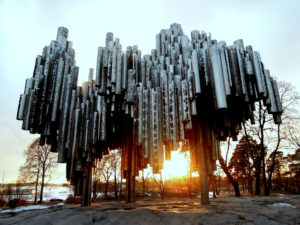
Sibelius monumnet Helsinki showing organ pipes that are tree trunks of the forest

Photo Pixabay, Sibelious Monument,

Music becomes a voice for change

I have long believed that the arts serve purposes far beyond decoration. A painting can tell a story. A poem can preserve a memory. A novel can give a forgotten person a voice. Drama and dance are transient vehicles for storytelling. And music? Music can bring people together.  have seen something of this for myself in my travels. I have stood before the monument to Jean Sibelius in Helsinki, Finland, and I have visited Estonia. Standing in those places, knowing something of their history, gives a different meaning to the music. You begin to understand that these were not simply composers writing beautiful melodies. In times of oppression and uncertainty, music can become a vessel carrying the identity of an entire people.

Music when a nation finds its voice

Consider Finland. For more than six hundred years, Finland was part of the Swedish realm. In 1809, it passed from Sweden to the Russian Empire and became an autonomous Grand Duchy. During the nineteenth century, a growing Finnish cultural movement sought to strengthen a distinct national identity. The Kalevala compiled from Finnish oral poetry, became an important expression of that identity. Artists, writers, and musicians began to give Finland a language of its own, not necessarily a political language, but a cultural one.

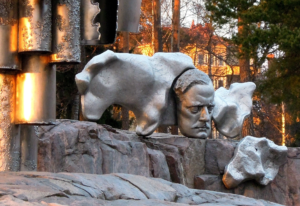
Sculpture of Sibelious Head, Helsinki

Photo Pixabay, Sibelious Monument

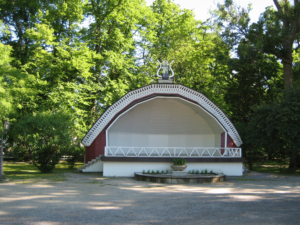
Then came Sibelius. In 1899, during a period of increasing Russian pressure and attempts at Russification, Sibelius composed the music that would become Finlandia It was originally part of a series of historical tableaux presented at the Press Celebrations in Helsinki. The final section, known as “Finland Awakes,” stirred something deep in the Finnish people. Finlandia became a symbol of Finnish nationalism. When I stood before the Sibelius monument, I wasn’t just viewing a memorial to a famous composer. It reminded me of what happens when art helps people remember their identity. Sibelius helped give Finland a sound, and sometimes people need a sound before finding a voice. Organ pipes represented the trees of the forest; forests go deep into the psyche of the Finnish people, a voice that resonated with them.Estonian Music Festival Stand

Estonia sang its way toward freedom

I experienced a similar feeling when I visited Estonia. Domination by powerful neighbors has marked Estonia’s history, and during the Soviet period, language and national identity were under pressure. Yet Estonia had an extraordinary cultural treasure: its singing tradition.

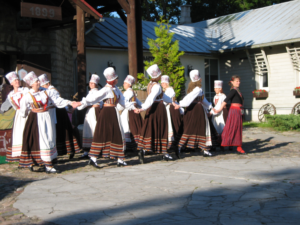
The Singing Revolution of the late 1980s demonstrated just how powerful that treasure could become. Hundreds of thousands of Estonians gathered at the Tallinn Song Festival Grounds and sang traditional and patriotic songs together. They sang Mu isamaa on minu arm, “Land of My Fathers, Land that I Love,” a song that had become deeply associated with Estonian identity. They also sang the patriotic songs of composer Alo Mattiisen.Music of Estonian Dancers

Estonian Folk Dancers, Video - Deryn van der Tang

This was nonviolence; they were not taking up arms, they were raising their voices. By 1989, the movement had grown into the remarkable Baltic Way, when people in Estonia, Latvia, and Lithuania joined hands in a human chain stretching across the three Baltic countries. Music had helped people remember they belonged to something larger than the political system that governed them.

The music that defied ruins

Then there is Sarajevo. During the terrible siege of Sarajevo in the 1990s, cellist Vedran Smailović became known as the “Cellist of Sarajevo.” After twenty-two people were killed while waiting for bread, Smailović returned to the devastated area and played Albinoni’s Adagio in G minor in their memory. Picture a city under attack. Amidst the broken buildings and people living in fear, a man sits with his cello and plays. The music could not stop the bombs, nor could it bring the dead back. But it declared something profound:

Beauty had not been destroyed. Human dignity had not been destroyed, and the human spirit had not been destroyed. That is the power of the arts.

Why do the arts matter?

When we talk about social change, we often think about politicians, protesters, legislation, and movements. And, of course, these matter. But underneath every movement is something deeper: a story about who we are and what we believe is worth preserving. Artists help us tell that story. A composer can give a nation a melody. Poets can preserve a language. Painters can capture a landscape that becomes part of a people’s memory. A storyteller can take the ordinary life of one family and reveal something universal about courage, suffering, and hope.

Perhaps that is why oppressive regimes have so often tried to control language, literature, music, and art. They understand something we sometimes forget: culture holds memory. And memory gives people identity.

The Bible tells us, “A word fitly spoken is like apples of gold in pictures of silver” (Proverbs 25:11).

Sometimes someone speaks, paints, sings, or writes that word.

The arts may not change the world overnight. Yet, they have the power to shift how people view the world. And once people see differently, they may begin to think differently, hope differently, and eventually act differently.

As I think about Finland, Estonia, and many other places I have traveled, I remember that the arts form a vital part of human society. They are part of our inheritance; they carry the stories of those who came before us. They inspire courage in those struggling today and plant seeds of hope for future generations. Perhaps that is why music has such extraordinary power.

A single voice may be silenced, a single instrument broken, yet a song alive in people’s hearts proves much harder to destroy.

And sometimes, when a people begin to sing together, the world begins to listen.

Join the discussion and follow me on these networks!

Apple Tree and Paradise Regained

Paradise Regained


The apple tree has been a symbol in myths, literature, and spiritual lore from the earliest times. When I was a child, my father grew fruit trees, and each year, in season, he took plums and apples into town to sell at the grocery store. We would dance around the orchard ‘helping’, putting the apples in the enormous wicker basket. My mother also made preserves, jam and jelly, and we had stewed apples we could enjoy throughout the year.

Apple Tree bearing fruit"The Apple of the Eye”: Protection, Innocence, and Sweetness

The apple tree’s fruit is perhaps best known for its role in the biblical story of Eden. It symbolized the desire for knowledge and the resulting temptation by the serpent, marking the fall of man through Adam’s disobedience. In this act of disobedience, where man was banished from Paradise, seeds were also sown for a story of redemption and renewal.

 “And I will put enmity between you and the woman, and between your offspring and hers; he will crush your head, and you will strike his heel. Gen 3:15 (this is taken as a reference to Christ crushing Satan, the tempter).” The Psalmist asked God to, “Keep me as the apple of your eye; hide me in the shadow of your wings,” Psalm 17:18, and the wisdom of Solomon in Proverbs 7:2, “Keep my commands and you will live; guard my teachings as the apple of your eye.”

The apple of one’s eye is something precious, cherished, and guarded. Something to value and protect, that spiritual knowledge we have been entrusted with. This image conveys not only protection but a childlike wonder at the things we value most. In Eden, it was the apple, that became the gateway to knowledge and losing innocence. What modern gateways are there now that tempt you to lose your joy and innocence?

Apple Tree with Blossom in Bedford orchard

The Church Bell Tower: Celebrating Life’s Milestones

When I was learning Dutch, I learned the apple core was called a ’klokhuis,’ roughly translated as ‘church bell tower,’ this fascinating term ties the apple to milestones like weddings, births, and funerals, marking the continuum of life, transitions, and the passage of time. It also holds seeds for the next generation of apple trees. The cycle of an apple tree mirrors the journey of humanity. In spring, it erupts in fresh blossoms, bringing to mind themes of birth, purity, beauty, and new beginnings. There was a small orchard in Bedford at the place where I worked for some years, which was a delight to my senses each spring. Bluebells danced beneath the pale pink blooms. I could gaze at them for hours as they were so beautiful. These blooms turned into ripe, sweet fruits in autumn. The cook made the most delicious apple crumble with them to celebrate the Harvest festival, symbolizing the joys and blessings of life and the hope for prosperity. Once the fruit is harvested, the tree reminds us of the season’s cycle — the inevitable “fall” — that gives way, eventually, to dormancy and the promise of regeneration.

Aplle Blossom- Regaining Paradise 

Christ the Second Adam: The Apple Tree and Redemption

The apple tree is also linked to themes of Christ as the “Second Adam.” In Christian symbolism, where Adam’s act of disobedience led to the fall of humanity, Christ’s coming is seen as the bridge back to Paradise — a “paradise regained.” The Christmas carol “Christ the Apple Tree” sings of this theme, evoking the image of Christ as a tree of life, a source of sustenance and eternal joy. This connection between Christ and the apple tree draws upon the idea that while humanity fell by searching for knowledge, it also holds hope for redemption and ultimate restoration through Christ. With Thanksgiving, and the Christmas season just around the corner, let your slice of apple pie remind you of faith, Paradise regained and renewal. Just as the apple tree blossoms anew in every annual cycle of spring. For those entering their last winter of life on this earth, thoughts of Paradise — that untouched realm of beauty and innocence — can serve as rejuvenating visions of hope and joy for eternal bliss.

The apple tree, in all its unsophistication, invites us to see the world with childlike eyes of wonder, wisdom, and hope for the future. With each season, it renews itself, reminding us that beauty and truth lie in the rhythms of nature and creation. We can look forward with hope to a future with new beginnings, whether here or in heaven where we live as the Redeemed. As with each tree I have written about, to cultivate in your inner garden, I think the apple tree is one of the most joyful. How can we cultivate more joy in our inner gardens?

If you enjoyed this blog and would like read more, as well as the poetry I write for these blogs, please sign up for my newsletter at the top of this page.


If you would like to explore more about environmental rejuvenation, spiritual harmony, and sustainable living in our journey towards a brighter, greener future. In the months ahead, I will share a poem, featuring a specific tree or plant, and a painting with you. Please subscribe to my monthly newsletter as I will feature the poem in it. Additionally, I can offer you a coloring poster to help you identify your needs, boundaries, weeds, and future seeds. This is a meditative exercise, giving you time to slow down and think about these things. Get this here.

Poster to color in


3 Comments

  1. Michele Brown

    Absolutely beautiful.
    As I was venturing on line looking up apple blossom… As I was in prayer yesterday I couldn’t smell apple blossoms and see them but a glimpse and the smelled the smell of an apple as if it were being cut , quite interesting to say the least.
    This gave me a little bit of understanding. With words .
    Blessings
    Michele Brown

    Reply
    • Deryn

      Thank you Michelle, I am glad the scent of apple blossom came to you through the words. May the Lord bless you as you walk in this beautiful garden with Him.

      Reply
  2. Michael

    A very nice and informative examination of the symbolism of apple trees and the apple blossom. Some good information I haven’t read before. Thank you for writing this!

    Reply

Submit a Comment

Your email address will not be published. Required fields are marked *

Join the discussion and follow me on these networks!

More From Crossing My Bridges

Sibelius monumnet Helsinki showing organ pipes that are tree trunks of the forest

Music becomes a voice for change

A single voice may be silenced, a single instrument broken, yet a song alive in people’s hearts proves much harder to destroy.
And sometimes, when a people begin to sing together, the world listens.

read more
Old Documents and phots

Why Every Family Has a History Worth Preserving

Every generation leaves something behind. A story, a lesson, or a memory, which is the thread connecting us to those who walked before us. Our responsibility is not only to discover those threads but to ensure they are not lost.

read more
Man in long grass with dog

THE STORIES OF ORDINARY PEOPLE

What ordinary people’s stories reveal is that true greatness is more than just being recognized. Sometimes it is measured simply by faithfulness in persevering day after day through the grind.

read more

Pin It on Pinterest

Share This