FINDING MEANING IN LIFE AGAIN

By Deryn

Feb 15, 2020

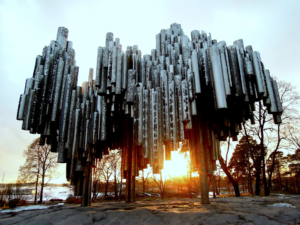
Sibelius monumnet Helsinki showing organ pipes that are tree trunks of the forest

Photo Pixabay, Sibelious Monument,

Music becomes a voice for change

I have long believed that the arts serve purposes far beyond decoration. A painting can tell a story. A poem can preserve a memory. A novel can give a forgotten person a voice. Drama and dance are transient vehicles for storytelling. And music? Music can bring people together.  have seen something of this for myself in my travels. I have stood before the monument to Jean Sibelius in Helsinki, Finland, and I have visited Estonia. Standing in those places, knowing something of their history, gives a different meaning to the music. You begin to understand that these were not simply composers writing beautiful melodies. In times of oppression and uncertainty, music can become a vessel carrying the identity of an entire people.

Music when a nation finds its voice

Consider Finland. For more than six hundred years, Finland was part of the Swedish realm. In 1809, it passed from Sweden to the Russian Empire and became an autonomous Grand Duchy. During the nineteenth century, a growing Finnish cultural movement sought to strengthen a distinct national identity. The Kalevala compiled from Finnish oral poetry, became an important expression of that identity. Artists, writers, and musicians began to give Finland a language of its own, not necessarily a political language, but a cultural one.

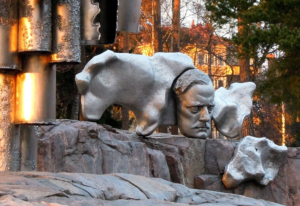
Sculpture of Sibelious Head, Helsinki

Photo Pixabay, Sibelious Monument

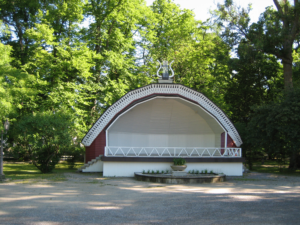
Then came Sibelius. In 1899, during a period of increasing Russian pressure and attempts at Russification, Sibelius composed the music that would become Finlandia It was originally part of a series of historical tableaux presented at the Press Celebrations in Helsinki. The final section, known as “Finland Awakes,” stirred something deep in the Finnish people. Finlandia became a symbol of Finnish nationalism. When I stood before the Sibelius monument, I wasn’t just viewing a memorial to a famous composer. It reminded me of what happens when art helps people remember their identity. Sibelius helped give Finland a sound, and sometimes people need a sound before finding a voice. Organ pipes represented the trees of the forest; forests go deep into the psyche of the Finnish people, a voice that resonated with them.Estonian Music Festival Stand

Estonia sang its way toward freedom

I experienced a similar feeling when I visited Estonia. Domination by powerful neighbors has marked Estonia’s history, and during the Soviet period, language and national identity were under pressure. Yet Estonia had an extraordinary cultural treasure: its singing tradition.

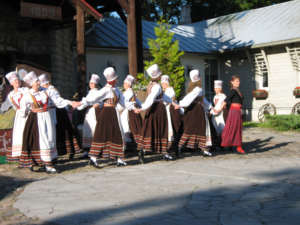
The Singing Revolution of the late 1980s demonstrated just how powerful that treasure could become. Hundreds of thousands of Estonians gathered at the Tallinn Song Festival Grounds and sang traditional and patriotic songs together. They sang Mu isamaa on minu arm, “Land of My Fathers, Land that I Love,” a song that had become deeply associated with Estonian identity. They also sang the patriotic songs of composer Alo Mattiisen.Music of Estonian Dancers

Estonian Folk Dancers, Video - Deryn van der Tang

This was nonviolence; they were not taking up arms, they were raising their voices. By 1989, the movement had grown into the remarkable Baltic Way, when people in Estonia, Latvia, and Lithuania joined hands in a human chain stretching across the three Baltic countries. Music had helped people remember they belonged to something larger than the political system that governed them.

The music that defied ruins

Then there is Sarajevo. During the terrible siege of Sarajevo in the 1990s, cellist Vedran Smailović became known as the “Cellist of Sarajevo.” After twenty-two people were killed while waiting for bread, Smailović returned to the devastated area and played Albinoni’s Adagio in G minor in their memory. Picture a city under attack. Amidst the broken buildings and people living in fear, a man sits with his cello and plays. The music could not stop the bombs, nor could it bring the dead back. But it declared something profound:

Beauty had not been destroyed. Human dignity had not been destroyed, and the human spirit had not been destroyed. That is the power of the arts.

Why do the arts matter?

When we talk about social change, we often think about politicians, protesters, legislation, and movements. And, of course, these matter. But underneath every movement is something deeper: a story about who we are and what we believe is worth preserving. Artists help us tell that story. A composer can give a nation a melody. Poets can preserve a language. Painters can capture a landscape that becomes part of a people’s memory. A storyteller can take the ordinary life of one family and reveal something universal about courage, suffering, and hope.

Perhaps that is why oppressive regimes have so often tried to control language, literature, music, and art. They understand something we sometimes forget: culture holds memory. And memory gives people identity.

The Bible tells us, “A word fitly spoken is like apples of gold in pictures of silver” (Proverbs 25:11).

Sometimes someone speaks, paints, sings, or writes that word.

The arts may not change the world overnight. Yet, they have the power to shift how people view the world. And once people see differently, they may begin to think differently, hope differently, and eventually act differently.

As I think about Finland, Estonia, and many other places I have traveled, I remember that the arts form a vital part of human society. They are part of our inheritance; they carry the stories of those who came before us. They inspire courage in those struggling today and plant seeds of hope for future generations. Perhaps that is why music has such extraordinary power.

A single voice may be silenced, a single instrument broken, yet a song alive in people’s hearts proves much harder to destroy.

And sometimes, when a people begin to sing together, the world begins to listen.

Join the discussion and follow me on these networks!

Article and Photos by Denise Mclaughlan

Denise continues to share her Festive Journey, how she in turn was inspired by her grandmother. How often we just need the example of someone who has done something before to inspire us on our own journeys. It seems their courage can synthesise and help us get a firm grip to say yes to life.

Highlights of my life in these past 28 years was a month-long visit to Italy with a friend, learning to speak some Italian in preparation, and the wonder of travelling at will with no pre- bookings.  Did I mention that I have an adventurous spirit?

Another venture I particularly enjoyed was my long-distance train trips over a five-year period from Cape Town to Johannesburg – a 1800km distance with one-night sleepover - to visit old school friends and attend some reunions. Despite the fears that many South Africans have about train travel in S A, I took it on wholeheartedly, meeting people of other cultures and feeling like a true adventurer. Of course, the lure was also my memory of childhood train trips since my dad was a railwayman. I had a few interesting encounters on that ShosalozaMeyl train!

To get back to the adventurous spirit, which I think has come not only from my brave grandmother who went overseas alone at the age of 78, but also the fact that I have been blessed with lots of energy and good health. As an extrovert I enjoy new places and faces! I like to be stimulated whether it is by reading all kinds of books, joining a photography group, doing computer courses, or enjoying music theatre and movies. I simply love swimming and am not fussy…river, dam, pool or a cold Atlantic sea!

A very meaningful part throughout my life has been writing – letters, diary keeping and then journaling. I love describing places and experiences, also tried my hand at a spot of poetry and then of course my Quiet times with the Lord is also affirmed in the journal. I usually use different devotional books like the wonderful Streams in the Desert By Mrs LB Cowman,    Come to me Beloved My Beloved by Frances J Roberts,    Joyce Meyer and a more recently I have used a book “ Fear is Never your Friend by Gary L Richardson. When I still get depressed or anxious it helps to write about it and to take stock of where you are in your life. I tend to do a fair amount of introspection.

Now in my 70’s I realised a dream to go back to camping and road trips (in my married years we caravanned and had an old Land rover) I missed the great outdoors and after watching a lot of Youtube videos about camper conversions and solo road trips, I managed to find someone to adapt my relatively small Mazda Soho 1,4 into a tour car. I have a full-length bed, some side cubbyholes for packing and storage under the bed for small tent, camping chair and other camping gear. I did two solo road trips and described the fun I had in some newsletters which I sent out via Facebook and e-mail. I then acquired a blow-up 2-man canoe which my son and I have enjoyed. Unfortunately, I had to undergo shoulder surgery and have been out of action for around 7 weeks.  Yes I am feeling the pitfalls of ageing in that I get stiff when sitting, my knee seems to be playing up, I drink all the usual pills  - but what is keeping me young are my thoughts and attitude- I try to stay positive and adapt to changes. I take stock of all the aspects of my life regularly and am dabbling with the new buzzwords – living mindfully!  I endeavour to stay in the here and now- to notice the small things around me; to forgive and forget, to take the best out of my past and hand over the control of my future to God my Father.

Denise has brought so much meaning into her life by being aware of her thoughts and attitudes, it can be so easy to slump into negative thoughts and attitudes, she has spent a lot of time cultivating the garden of her mind, pulling out the weeds of toxic thinking and replacing them with positive and affirming thoughts, this all manifests in her being able to take on her Festive Journey and enjoy the life she has been given. How about you? Do comment and let us know how you have taken something negative and made something positive out of it.

2 Comments

  1. Betsy McPeak

    Denise, you sound like someone fun to be with! I love all the same things that you do. I love how you are stepping out there and living life to the fullest! I am curious about your Buzz Words that you are playing with. Care to share? Maybe in your next post?

    Reply
  2. Denise

    Hello Betsy, How nice to hear from someone so far away. The only buzzwords I mentioned were – Living mindfully… and this concept we are finding in more and more books magazines and the media. What it means to me is to present in the moment- aware of the actual day I am having – to not dwell on the past, especially if there were hurts there, also not to be unduly anxious about the future- I still fall into this trap to worry about the future… If I may suggest what works for me- is that I journal or just keep an old-fashioned diary going to write about what is happening in my life and what I want to do better or change. I find writing it down makes it more mindful and real and concrete. Even though I am a Christian and know God is in control I still have concerns about this or that in the future.
    I also believe in siezing the day – Carpe Diem. It is the only time frame you are sure of – the here and now ! Changes happen so quickly but if you spend the present day in a positive and mindful way , it carries over into the next day, I find.
    Would like to hear from you- where you live and how you know Deryn. I love to travel in my mind and in books and documenteries as I can no longer afford to go.So great to hear of other places where people are and learning more- I am into Geography and History!!

    Keep well and feel free to write to me – you can see my e-mail address below I take it?
    Kind regards
    Denise McLoughlin
    Cape Town
    South Africa

    Reply

Submit a Comment

Your email address will not be published. Required fields are marked *

Join the discussion and follow me on these networks!

More From Crossing My Bridges

Sibelius monumnet Helsinki showing organ pipes that are tree trunks of the forest

Music becomes a voice for change

A single voice may be silenced, a single instrument broken, yet a song alive in people’s hearts proves much harder to destroy.
And sometimes, when a people begin to sing together, the world listens.

read more...
Man in long grass with dog

THE STORIES OF ORDINARY PEOPLE

What ordinary people’s stories reveal is that true greatness is more than just being recognized. Sometimes it is measured simply by faithfulness in persevering day after day through the grind.

read more...

Pin It on Pinterest

Share This